Secure Data Wiping Services for Corporate IT Assets
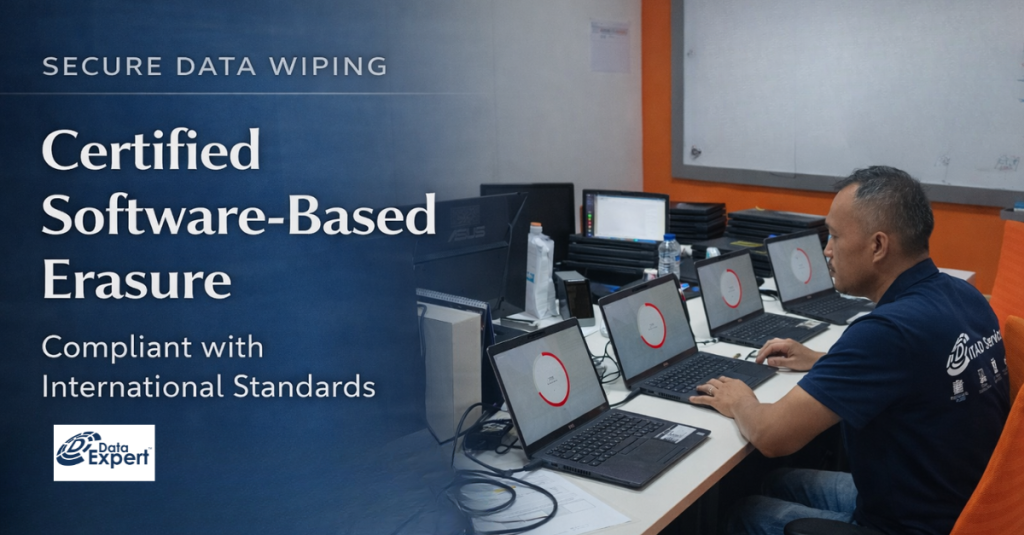
Ensure sensitive corporate data is permanently erased from laptops, servers, and storage devices using certified software-based data wiping compliant with international standards.
Why Secure Data Wiping Is Important for Businesses
Many organizations replace laptops, servers, and other IT assets every few years. However, simply deleting files or formatting storage devices does not permanently remove sensitive data.
Data stored on old devices may still be recoverable using specialized recovery tools. If these devices are resold, recycled, or disposed of without proper data sanitization, confidential corporate information could potentially be exposed.
This creates serious risks including:
• Data breaches
• Loss of customer trust
• Regulatory and compliance issues
• Corporate reputation damage
Because of these risks, companies increasingly use secure data wiping services before disposing or remarketing IT assets.
What Is Secure Data Wiping
Secure Data Wiping is a process of permanently erasing data from storage devices using specialized software that overwrites existing data according to internationally recognized standards.
Unlike simple deletion or formatting, data wiping ensures that information stored on a device cannot be recovered.
This method is widely used by companies when:
• retiring old laptops or desktops
• replacing servers and storage equipment
• remarketing used IT assets
• preparing devices for resale or recycling
Why Companies Use Secure Data Wiping
Organizations rely on secure data wiping to protect sensitive information when retiring or remarketing IT assets.
Secure data wiping helps companies:
• prevent data breaches
• protect customer information
• comply with internal security policies
• prepare devices for resale or recycling
Because of these advantages, secure data wiping has become a standard practice in modern IT asset management.
International Standards
Data wiping performed by professional service providers typically follows recognized global standards.
These include:
• NIST 800-88 Guidelines for Media Sanitization
• industry best practices for data destruction
• audit-friendly documentation procedures
Following these standards ensures that the data sanitization process is secure, verifiable, and compliant with corporate IT policies.
Devices That Can Be Wiped
Secure data wiping can be applied to a wide range of IT equipment, including:
• Laptops
• Desktop computers
• Servers
• Hard disk drives (HDD)
• Solid state drives (SSD)
• External storage devices
Each device is processed using specialized wiping software to ensure that data is permanently erased.
Our Secure Data Wiping Process
Typical data wiping projects follow a structured process to maintain security and traceability.
Step 1 – Asset Collection
IT assets are collected from the client location or received at our facility.
Step 2 – Asset Verification
Each device is verified and prepared for data sanitization.
Step 3 – Secure Data Wiping
Certified software performs secure overwriting of storage media.
Step 4 – Verification
Wiping results are verified to ensure successful data removal.
Step 5 – Documentation
A report and certificate of data destruction can be issued after completion.
Why Companies Use Professional Data Wiping Services
Organizations rely on professional vendors for several reasons:
• secure and controlled data destruction process
• compliance with corporate security policies
• documentation for internal audit
• reduced risk of data leakage
Using a trusted service provider ensures that IT assets can be safely remarketed, recycled, or disposed of without compromising sensitive information.
Related Services
Companies often combine secure data wiping with other services such as:
• Hard Disk Shredding
• Degaussing
• IT Asset Disposal
• E-Waste Recycling
These services ensure that IT assets are handled securely throughout their lifecycle.
Or request a proposal for secure data destruction services:
If your organization is planning to retire, replace, or dispose of IT equipment, secure data wiping is a critical step to protect corporate information.
Contact our team to learn more about our secure data wiping services.
FAQ
No. Deleting files or formatting a device does not permanently erase data. In many cases, data can still be recovered using recovery tools.
Many organizations follow internationally recognized guidelines such as NIST 800-88 media sanitization standards.
Secure data wiping is typically performed before IT assets are resold, recycled, or disposed of.